
You’ve probably seen one: a slim rectangular unit mounted high on a wall, quietly cooling a room with no ductwork in sight. That’s a mini-split. It’s one of the most flexible cooling options available and has become increasingly popular in Twin Cities homes that were built long before central air conditioning was standard. Here’s what you need to know before deciding whether one makes sense for you.
How Mini-Split Systems Work
Think of a mini-split as a traditional AC system with the ductwork removed. Instead of routing cooled air through a network of ducts, the system moves heat directly through refrigerant between an outdoor unit and an indoor unit in the room you want to cool.
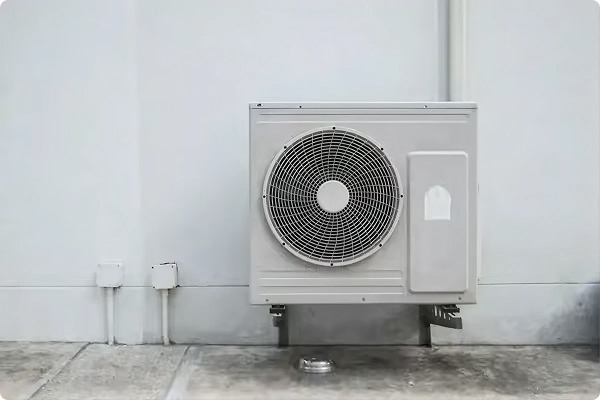
The outdoor unit does the heavy lifting. It houses the compressor and releases heat from your home into the outside air. The indoor unit mounts on the wall, ceiling, or floor and quietly conditions the room. A three-inch hole in the wall is all it takes to connect them. Each indoor unit has its own remote or thermostat, so you control every room independently. If you have a larger home or multiple spaces to cool, one outdoor unit can connect to up to eight indoor units, each running on its own schedule.
Benefits of Mini-Split Air Conditioning
The main reason homeowners choose a mini-split air conditioner is simple: it goes where traditional central AC can’t. No ductwork means it works in older homes, finished attics, additions, garages, home offices, and any room that has always been uncomfortable regardless of what the rest of the house feels like.
The efficiency numbers are genuinely impressive. While a standard central AC must meet a minimum of 13.4 SEER2, most mini-splits run between 18 and 33 SEER2. The difference comes from the compressor. A mini-split uses a variable-speed inverter compressor that adjusts its output continuously rather than switching on and off. Less cycling means less energy wasted and more consistent temperatures. And because most mini-splits also heat, one system can handle year-round comfort in the spaces it serves.
Mini-Split vs. Central Air: Which Is Right for Your Home?
If you already have ductwork and it’s in reasonable shape, central AC is likely the more cost-effective path. The ducts are already there, the equipment stays hidden, and one thermostat handles the whole house. The limitation is that ducts treat every room the same, and any problem in the duct system affects the whole house.
Mini-splits make the most sense when there are no ducts to work with, when you want different temperatures in different rooms, when you’re conditioning a new addition or finished space, or when energy efficiency is a priority. Twin Cities homeowners weighing their options can also explore the best AC system for older homes to compare alternatives side by side.
Mini-Split Installation Cost
Mini-split pricing depends on the number of zones, brand, efficiency rating, and installation complexity. According to Angi, a single-zone mini-split in Minneapolis costs $2,500 to $5,550 installed, with the average 12,000 BTU unit coming in around $3,500. Multi-zone systems covering three to five rooms run $9,000 to $18,000. Whole-home installations with six or more indoor units can exceed $20,000.
Cost increases with more indoor units, higher efficiency ratings, required electrical upgrades for the outdoor unit, and the difficulty of routing refrigerant lines through or around the home.
Hero Home Services offers financing through Service Finance Company, LLC, with 0% APR available for qualified buyers.
What to Expect During Installation
A single-zone installation usually wraps up in one to two days. Multi-zone systems take two to four days, depending on how many units are being installed and how the lines need to be routed.
The process is less invasive than most homeowners expect. The crew mounts the outdoor unit, installs each indoor unit, and runs the refrigerant lines and condensate drain through a small opening in the wall or along a covered exterior raceway before making the electrical connections. On the final day, the system is tested, airflow is balanced across every room, and a technician walks you through how everything works before the crew leaves. Your installer handles permits and inspections.
One thing worth knowing: if you like the idea of ductless cooling but don’t love the look of wall-mounted units in every room, a small-duct high-velocity system is worth comparing before you decide.
Top Mini-Split Brands
Mitsubishi Electric and Daikin are two of the most trusted names in mini-split systems for cold climates. Both make models specifically designed for Minnesota winters, built to provide reliable heating even when outdoor temperatures drop to 5°F or below. LG is another solid option with competitive pricing across a range of system sizes.
Keep in mind: even the best equipment underperforms if it’s not installed correctly. When comparing options, pay as much attention to the installer’s experience and the warranty terms as you do to the equipment itself. Look for a parts warranty of at least 10 years on the compressor and ask upfront whether labor is covered if something goes wrong.
Is a Mini-Split Right for Your Twin Cities Home?
For cooling only, almost any well-installed mini-split will do the job in Minnesota. For year-round heating and cooling, the model matters a lot. Standard mini-splits lose a significant portion of their heating capacity when temperatures drop below 17°F. In the Twin Cities, that’s not a rare event. It’s a typical January.
If you want a mini-split to handle heat as well as cooling, ask specifically about cold-climate models. Mitsubishi Hyper-Heat and Daikin Aurora are the most commonly installed options for our climate. If you plan to keep your furnace or boiler and just want to add cooling or supplement heat in specific rooms, you have more flexibility on brand and model.
Frequently Asked Questions
How much does a mini-split cost in the Twin Cities?
According to Angi, a single-zone system in Minneapolis costs $2,500 to $5,550 installed. Multi-zone systems covering three to five rooms run $9,000 to $18,000. Whole-home setups with six or more units can exceed $20,000. Every quote should be in writing before work begins.
Do mini-splits work in Minnesota winters?
Cold-climate models perform well. Mitsubishi Hyper-Heat, Daikin Aurora, and similar units maintain full heating output at 5°F and continue heating below -13°F. Standard models aren’t built for sustained sub-zero temperatures and aren’t a reliable primary heat source for a Twin Cities winter.
How efficient are mini-splits?
Most modern mini-splits run 18 to 33 SEER2, well above the 13.4 federal minimum for standard central AC. The variable-speed compressor is the key. It adjusts output continuously rather than cycling on and off, which saves energy and keeps room temperatures more stable.
Can a mini-split heat my whole home?
A multi-zone cold-climate system can handle most or all of a home in the Twin Cities. Many homeowners keep a furnace or boiler as a backup for the coldest weeks of the year, which is a practical approach. Whether you need that backup depends on the home, the system size, and how cold it gets where you are.
How long does mini-split installation take?
As mentioned, single-zone installs typically take one to two days. Multi-zone setups take two to four days, depending on the number of units and line routing.
How long do mini-splits last?
A well-maintained mini-split typically lasts 15 to 20 years. Annual professional maintenance keeps it running efficiently and preserves the warranty.
Schedule a Mini-Split Consultation with Hero
If a mini-split sounds like the right fit, the next step is an in-home visit. Hero Home Services will talk you through your options for a mini-split installation and answer any questions you might have. Call or text us to schedule your visit, and we’ll write up an itemized quote before any work begins.