
An AC that won’t start is frustrating, but the cause is often something a homeowner can check in five minutes. Here are the most common reasons an AC in the Twin Cities won’t turn on, starting with the easiest fixes and working toward the issues that need a licensed technician.
Thermostat Issues
Start by checking the mode. If the system is set to “Heat” or “Off” instead of “Cool,” the AC won’t start. Next, check the temperature setting. If the room is already cooler than the temperature you’ve set, the AC has no reason to run. Lower the temperature by a few degrees and see if the system kicks on.
Check the display screen. A blank or flickering screen usually means dead batteries in battery-powered units. Replace them and see if the display comes back. For hardwired thermostats, check your electrical panel for a tripped breaker labeled “furnace” or “air handler” and reset it if needed. Smart thermostats sometimes need a power cycle. Pull the thermostat off the wall, wait 30 seconds, and push it back into place.
If new batteries, the right mode, and a lower temperature setting don’t bring the system to life, the thermostat itself may be failing. When the display stays dark after trying everything above, call a licensed technician to assess whether a replacement is needed.
Tripped Breaker or Electrical Wiring Issues
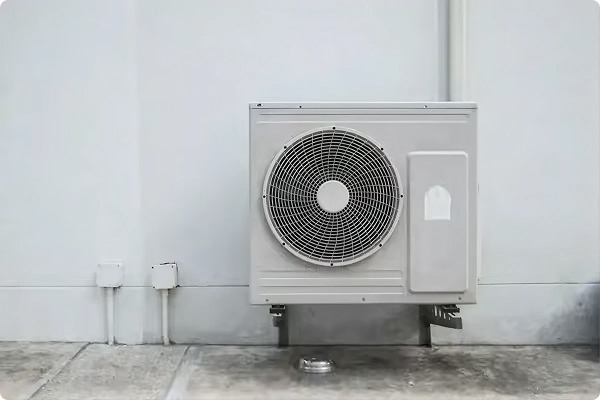
Your AC runs on two electrical connections: the main breaker in your home’s electrical panel and a disconnect box mounted near the outdoor condenser. Either one can trip due to a power surge, a short, or an overloaded circuit. If the outdoor unit is completely silent with no humming or fan noise, the breaker is the first thing to check.
To do this, just open your electrical panel and find the breaker labeled for the AC or air conditioner. A tripped breaker sits in the middle position between “On” and “Off,” or may show a red or orange indicator. Push it firmly to “Off” and then back to “On” to reset it. Next, locate the outdoor disconnect box, which is usually a small metal box mounted on the wall near the condenser. Open it and confirm the switch or pull-out block is in the “On” position. After resetting both, wait three minutes before trying the thermostat again. This gives the compressor time to reset before the system tries to start.
If the breaker trips again right away, won’t stay reset, smells burnt, or you see scorch marks anywhere near the panel or disconnect box, stop and call a licensed technician. Repeatedly resetting a tripping breaker can cause a fire. Repeated trips usually point to a wiring short, a failing capacitor, or a compressor drawing too much power at startup.
Frozen Evaporator Coil
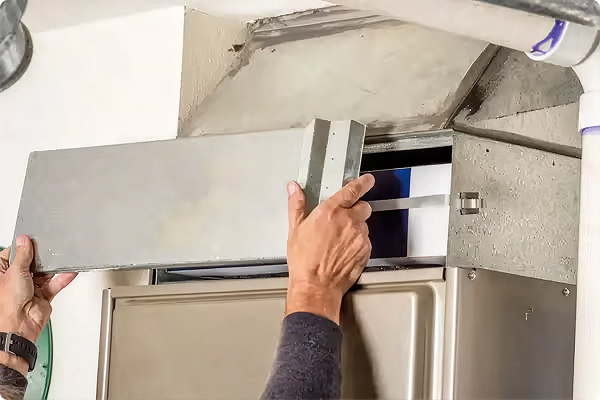
Ice on an AC is one of the more confusing symptoms because it usually forms inside the home, not at the outdoor unit. Your AC has two coils: the evaporator coil sits indoors on top of the furnace, and the condenser coil sits outside. When the indoor coil freezes over, the system may shut down, refuse to restart, or keep running without producing any cold air.
The most common causes are a dirty filter, blocked return vents, a closed damper, low refrigerant, or a failing blower motor. Signs to look for include visible ice on the copper line where it enters the indoor unit, water dripping from the indoor air handler, or an AC that hums but won’t start.
Here’s what to do: Set the thermostat to “Off” and let the system thaw completely, which can take anywhere from 4 to 24 hours depending on how much ice has built up. While it’s thawing, replace the air filter and make sure every return vent in the home is open and unblocked. Once the unit is dry, restart the system and monitor it closely. If ice comes back within a day, call a licensed technician. Recurring freezes usually point to low refrigerant or an airflow problem that needs a proper diagnosis.
Major Component Failure
If the thermostat, breaker, and frozen coil checks haven’t all checked out, the problem is usually a hardware failure inside the unit. The three most common are a failed capacitor, low refrigerant from a leak, or a failed compressor. Each needs a licensed technician to diagnose and repair. Schedule AC repair if you suspect any of these issues.
A Failed Capacitor
The capacitor is a small cylindrical part inside the outdoor unit that stores the electrical charge needed to kick the compressor and fan motors into action. It’s also the single most common AC component failure. Symptoms: a humming or clicking sound from the outdoor unit when the thermostat calls for cooling, but the fan and compressor don’t respond. Sometimes the system runs briefly, then shuts off. Capacitor replacement costs $150 to $450 installed and takes a Hero technician less than an hour. Do not attempt to test or replace a capacitor yourself. They hold high voltage even when the system is off.
Low Refrigerant From a Leak
Refrigerant is what your AC uses to actually move heat. If the system has a leak, refrigerant drops below the minimum charge and a pressure switch shuts the unit down to protect the compressor. Symptoms: warm or weak air when the AC does start, ice on the indoor evaporator coil, a hissing or bubbling sound near the refrigerant lines, and a system that won’t restart consistently. A service call covers leak detection, repair, and recharge. On systems older than 10 years that use R-22 refrigerant, replacement often makes more financial sense than chasing a leak.
A Failed Compressor
The compressor is the heart of the AC. When it fails, the system can’t move refrigerant and won’t cool, regardless of how everything else looks. Symptoms: a hard humming or clicking sound followed by silence, no cold air, repeated breaker trips, and an outdoor fan that won’t spin even after the capacitor checks out. Compressor replacement is the most expensive single repair on a residential AC. On a system 10 years or older, the math usually points to replacing the whole unit rather than just the compressor. A Hero technician will run the diagnostic and walk through both options in writing.
Frequently Asked Questions
Why Is My AC Not Turning On But the Thermostat Is On?
Most often, the AC breaker has tripped, or the outdoor disconnect is off. Check the breaker and the disconnect box first. If both look fine and the system still won’t start, the next likely cause is a failed capacitor.
How Do I Reset My AC?
Switch the thermostat to “Off,” then turn the AC breaker in your electrical panel to “Off” for 30 seconds. Turn the breaker back to “On,” wait 3 minutes for the compressor to reset, then switch the thermostat back to “Cool.”
Can a Dirty Filter Stop the AC From Turning On?
Yes. A heavily clogged filter restricts airflow enough to freeze the evaporator coil, which can trigger a safety shutoff and keep the system from restarting. Replace the filter and let the coil thaw before trying again.
Why Does My AC Click, But Not Start?
A clicking sound from the outdoor unit without startup usually points to a failed capacitor. The capacitor holds the charge needed to kick the motors into motion, and when it fails, the system tries to start, can’t, and clicks instead.
How Much Does It Cost to Fix an AC That Won’t Turn On?
Simple fixes like a breaker reset or thermostat battery replacement cost nothing. Capacitor replacement costs $150 to $450. Refrigerant leak repairs and compressor replacements vary depending on the extent of the damage and the age of the system. A Hero technician will provide a written estimate before any work begins.
AC Still Won’t Turn On? It’s Time to Call a Pro.
If you’ve checked the thermostat, the breaker, and the air filter, and the AC still won’t turn on, it’s time to bring in a licensed technician. Hero handles diagnostics, capacitor replacement, refrigerant work, and full system repairs across the Twin Cities. Call or text us and we’ll get a licensed technician to your home.