
Ice on your air conditioner is a sign that something’s wrong with airflow or refrigerant charge. The good news is that many frozen AC issues have straightforward causes and simple fixes. Here are five common reasons ice builds up on a residential AC, what to check yourself, and when it’s time to call a pro.
Cause 1: Dirty or Clogged Air Filter
A dirty air filter is the most common cause of ice on a residential AC. When the filter clogs, airflow across the evaporator coil slows. Without warm air moving across the coil, the temperature keeps falling until the condensation on the evaporator freezes.
Signs to look for:
- Weak airflow at the vents
- Visible frost on the copper refrigerant line near the indoor unit
- Water dripping from the indoor unit as ice starts to melt
- A noticeable jump in your electric bill
Pull the filter and hold it up to a bright light. If light can’t pass through, it’s time for a replacement. Most filters need swapping every 1 to 3 months during the cooling season.
Cause 2: Dirty Evaporator Coils
The evaporator coil is the indoor coil that sits on top of the furnace. Even with a clean filter, dust and biofilm build up on the coil fins over the years, restricting airflow and causing the surface temperature to drop low enough to freeze ambient water vapor.
Signs to look for:
- Warm or lukewarm air from the vents
- A musty smell when the system runs
- Water in the drip pan or on the floor near the air handler
Coil cleaning isn’t a DIY job. The fins are easy to damage if you don’t have the right tools and cleaner. Schedule AC maintenance if the filter’s clean but ice keeps coming back. Hero technicians use a no-rinse coil cleaner that dissolves biofilm without damaging the fins.
Cause 3: Low or Leaking Refrigerant
Refrigerant is the fluid a residential AC uses to move heat out of the home. It operates in a closed loop, which means it can’t be used up and doesn’t need to be topped off under normal conditions.
When refrigerant runs low, pressure inside the system drops with it. That drop cools the evaporator coil below its designed temperature, and moisture in the air freezes onto the coil and the copper lines around it. If the refrigerant is low, there’s almost certainly a leak somewhere that needs to be repaired.
Signs to look for:
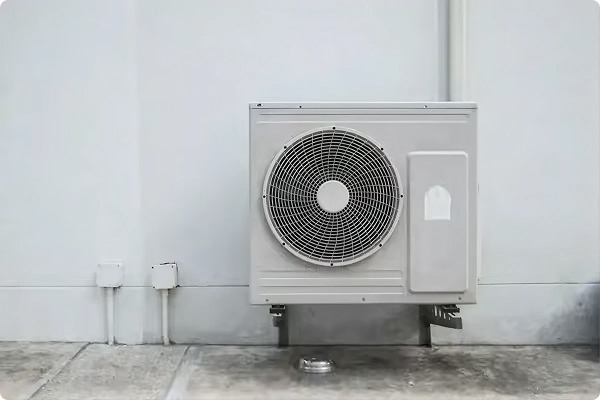
- Ice on the copper suction line at the outdoor unit
- Warm air from the vents
- A hissing or bubbling sound near the AC
Refrigerant work requires a licensed technician. Continuing to run an AC with low refrigerant can damage the compressor. Schedule AC repair right away if you notice ice on the outdoor line or hear a hissing sound near the system.
Cause 4: Blocked Condensate Drain
Your AC produces condensation when it runs. That water runs into a drip pan and exits through a PVC or plastic tube. When that tube clogs with algae, dust, or debris, water backs up into the pan and can freeze.
Signs to look for:
- Standing water in the drip pan
- Water on the floor near the indoor unit
- The system shutting off unexpectedly as a float switch prevents overflow
- Ice forming on the bottom of the coil rather than the top
For a DIY fix, a wet/dry shop vac attached to the outdoor end of the condensate line can pull out buildup in a few minutes. Persistent clogs usually call for a professional cleaning and a check of whether the tube is positioned correctly.
Cause 5: Running the AC in Low Outdoor Temperatures
Residential ACs are engineered to operate in warm weather. When the temperature outside drops below 60 degrees Fahrenheit, refrigerant pressures inside the system drop too, and the coil can freeze even when everything else is working correctly.
This catches a lot of Minneapolis homeowners off guard during the spring and fall. You might run the AC on a warm afternoon in early May or September, then wake up the next morning to ice on the unit because temperatures dropped overnight.
Signs to look for:
- Ice appearing overnight or on cool days
- Ice that clears on warmer days
- Coil freezing without any filter or coil problem
The fix is straightforward. Switch the thermostat to “Off” on nights when the forecast dips below 60 degrees, and let the house cool naturally or open a window instead.
Frequently Asked Questions
Why does an AC freeze up in the summer?
Most summer freezing traces back to restricted airflow from a dirty filter or dirty coils, or to low refrigerant. If ice returns even after you change the filter and let the system thaw completely, it’s time to call a technician.
Can I use a hair dryer to melt the ice on my AC?
No. Direct heat can warp the drip pan, damage refrigerant line insulation, or crack fittings. Let the ice melt naturally with the thermostat set to “Off” and the fan set to “On.”
Can a frozen AC damage the compressor?
Yes. Running a frozen AC can push liquid refrigerant into the compressor, which is designed to handle only vapor. That causes serious internal damage and is one of the most expensive AC repairs possible. It’s why the first troubleshooting step is always to shut the system off.
How can I prevent my AC from freezing?
Change the filter every 1 to 3 months during the cooling season. Schedule annual AC maintenance. Keep your vents clear and unobstructed. Turn the AC off when overnight lows drop below 60 degrees in spring or fall.
Ice Keeps Coming Back? It’s Time to Call a Pro.
If the ice returns after you’ve changed the filter and let the system thaw, the cause is likely low refrigerant, coil buildup, or a drainage issue that needs a licensed technician. Hero handles coil cleaning, refrigerant leak detection, condensate drain service, and full system repairs across the Twin Cities. Call or text us and we’ll get a licensed technician to your home.