
Plenty of Twin Cities homes were built long before central air was an option. Beautiful old Minneapolis bungalows, Foursquares, and St. Paul Victorians often run on hot water radiator heat with no ductwork in the walls.
For years, residents of these homes had two choices: window units or a traditional central AC that meant tearing out plaster, dropping ceilings, or giving up closets. Small-duct high-velocity air conditioning is a third option, and for a lot of Twin Cities homeowners, it’s the right one. Here’s how it works, why it’s a strong fit for older Twin Cities homes, and what to expect from an installation.
What Is Small-Duct High-Velocity Air Conditioning?
A small-duct high-velocity system is central air conditioning that works through 2-inch flexible tubing instead of the large metal ducts a traditional system requires. It was designed specifically for homes where conventional ductwork can’t go without tearing out walls and ceilings. The result is whole-home central cooling without demolition.
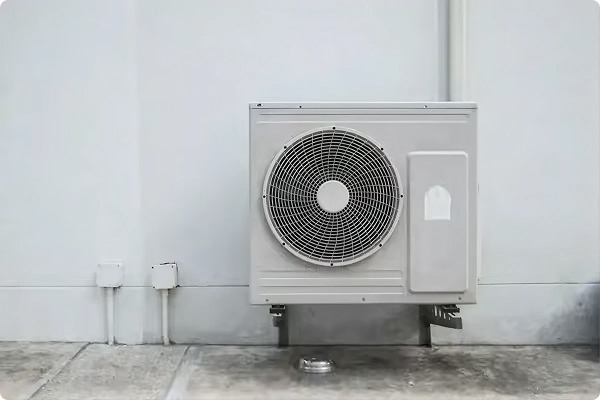
The mechanics are similar to any central AC. There’s an outdoor condenser, an indoor air handler, and refrigerant lines connecting them. What’s different is how the cool air gets to each room. A traditional system moves a large volume of air slowly through wide metal ducts. A small duct system moves a smaller volume of air at higher speed through narrow flexible tubing. The tubing fits where sheet metal can’t, and the outlets it feeds are small enough to disappear into a ceiling or wall.
How Small-Duct Systems Work
A small-duct installation starts with the air handler. It lives in an attic, basement, or large closet and connects to a central distribution box that branches out into the 2-inch flexible tubing. From there, the flexible, 2-inch tubing snakes through existing wall cavities, between joists, and around obstacles, finding paths that simply don’t exist for traditional ductwork.
Each room gets a small, round outlet about 2 inches in diameter, set into the ceiling, wall, or floor. When air exits at high velocity, it pulls surrounding room air into the stream with it. That mixing effect keeps the cooling even throughout the room rather than blasting cold air from one spot. It also removes humidity more aggressively than a conventional system, roughly 30 percent more, which matters during the kind of sticky summer weeks the Twin Cities delivers.
Benefits of Small Duct Air Conditioning for Older Twin Cities Homes
The case for small-duct systems comes down to what they do that other options can’t. Here are the five biggest benefits.
- The 2-inch tubing routes through existing wall cavities without opening plaster walls or dropping finished ceilings.
- Outlets are about the size of a smoke detector. They sit flush with the ceiling or wall and blend in rather than stand out.
- The system removes roughly 30 percent more humidity than a conventional central AC, which makes a real difference on muggy summer days.
- The aspiration mixing effect at each outlet produces even cooling throughout the home, with fewer hot spots upstairs or in corner rooms.
- The system handles cooling only and has no relationship to the existing heating system, so boilers and radiators stay exactly where they are.
Combined, those benefits make small-duct systems one of the cleanest, least disruptive ways to add real central cooling to a Twin Cities home that wasn’t designed for it.
Is a Small-Duct System Right for Your Home?
Small-duct high-velocity systems are a great fit for older homes with plaster walls or finished spaces that shouldn’t be disturbed. They’re also ideal if you want to keep your existing boiler or radiator system and have space for an air handler in an attic, basement, or large closet.
They’re also a strong choice for homeowners who’ve already ruled out ductless mini-splits because they don’t want visible wall-mounted units in every room. These systems are probably not the right fit if the home already has functional ductwork in good condition, since a traditional central AC will cost significantly less.
If budget is the primary concern, ductless mini-splits are usually less expensive. And if there’s genuinely no space for an air handler, the options change. A Hero technician can walk through the alternatives during an in-home visit. Twin Cities homeowners weighing their options can also explore the best AC systems for older homes to compare alternatives side by side.
Small-Duct Air Conditioning Installation in the Twin Cities
Most single-zone installations in a Twin Cities home take three to five days. Larger homes or multi-zone projects run five to seven days.
Day 1: The outdoor condenser gets mounted, the air handler goes into its planned location, and the central distribution box is connected.
Day 2: The crew maps out paths through wall cavities and joist bays before any tubing goes in.
Days 3 to 4: Tubing runs, outlet placement, refrigerant line installation, and electrical connections are completed.
Final day: Airflow is verified at every outlet, the system is started up, and a technician walks you through how everything works before the crew leaves.
Hero Home Services offers small-duct AC system installation starting as low as $260 per month with approved credit. Financing is also available through Service Finance Company, LLC, including 0% APR options for qualified buyers. Permits and inspections are handled by the licensed installer.
Frequently Asked Questions
How much does a small-duct AC cost in the Twin Cities?
Hero Home Services provides flexible financing options for small-duct AC systems, starting as low as $260 per month with approved credit. Every quote comes in writing before any work begins.
How is a small-duct different from a mini-split?
A mini-split mounts a visible indoor head on the wall in each room. A small-duct system distributes air from one central air handler through hidden tubing to small round outlets that blend into the ceiling or wall. Small-duct systems look and function closer to traditional central AC. Mini-splits are typically less expensive but leave equipment visible in every conditioned space.
Can a small-duct system heat my home too?
It can, if the system is paired with a heat pump or a hydronic coil. Most small-duct installations in the Twin Cities focus on cooling and leave the existing boiler or furnace in place for winter. But heating is possible if that’s part of the goal. Ask your Hero technician during the consultation.
Will a small-duct AC work with my boiler?
Yes. Small duct systems are installed alongside hot water boilers and radiators regularly. The boiler stays as the primary heat source through winter, and the small-duct system handles cooling when the warm months arrive.
How long does installation take?
Most single-zone Twin Cities homes are completed in three to five days. Larger or multi-zone projects typically run five to seven days.
Is a small-duct AC noisier than a traditional AC?
Modern small duct systems are quiet. The air handler is typically in an attic or basement, away from living spaces, so the main source of sound is out of earshot. The outlets themselves produce very little noise during normal operation.
Schedule a Small-Duct AC Consultation
If you’re thinking about adding central cooling to an older Twin Cities home, the next step is an in-home consultation. Hero Home Services will talk you through your options for small-duct air conditioning installation and answer any questions you might have. Call or text us to book your visit.