
You’ve probably walked past the metal box sitting outside your house a hundred times without thinking much about it. That’s the outdoor unit, and understanding what’s inside it can save you time, money, and a lot of frustration when something goes wrong. Here’s what the condenser does, why it fails, and how to keep it running for its full lifespan.
What Is the AC Condenser and Where Is It Located?
The AC condenser is a coil of copper or aluminum tubing that converts hot refrigerant gas into liquid by releasing heat to the outside air. The outdoor unit also houses the compressor and the fan, but the condenser coil is the component that gives the unit its name.
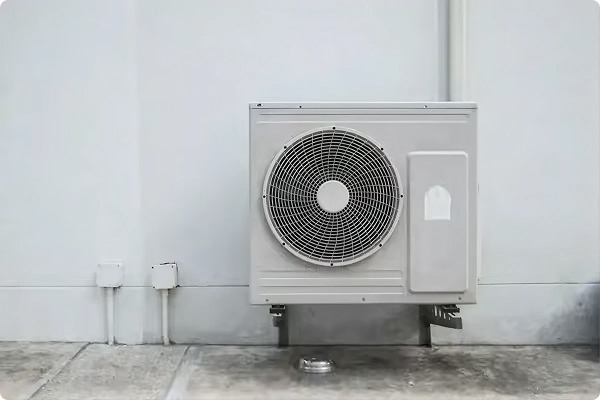
You’ll find the outdoor unit on a concrete pad or wall bracket on the side or back of your home. Two insulated copper refrigerant lines and an electrical supply line connect it to the indoor half of the system, which sits on top of your furnace.
The Components Inside the Outdoor Unit
Three components work together inside the outdoor unit during every cooling cycle, and all three have to function correctly for the system to cool your home.
The compressor pumps refrigerant through the entire system. Think of it as the engine. It takes low-pressure refrigerant gas coming in from indoors and pressurizes it into a hot, high-pressure gas.
The condenser coil is the large loop of finned tubing wrapped around the outside of the unit. Hot refrigerant flows through it while the fan pulls outdoor air across the fins, stripping the heat away.
The condenser fan sits at the top of the unit, drawing outdoor air across the coil so the heat can escape. Without it, the refrigerant has nowhere to dump its heat, and the system shuts down.
If any one of these components fails, the AC stops cooling properly.
How the Condenser Works
Central air conditioning doesn’t actually create cold air. It moves heat from inside your home outdoors. The condenser is where that heat gets released. Here’s the sequence from start to finish.
- 1. Warm refrigerant vapor from the indoor evaporator coil returns to the outdoor unit.
- 2. The compressor pressurizes the refrigerant, turning it from a low-pressure gas into a high-pressure, high-temperature gas.
- 3. The high-pressure gas flows through the condenser coil. As the fan pulls outdoor air across the coil, the refrigerant releases heat and condenses into a high-pressure liquid.
- 4. The high-pressure liquid refrigerant travels back to the indoor unit and passes through an expansion valve. This creates a sharp pressure drop, turning the refrigerant into a cold mixture of liquid and vapor.
- 5. The cold refrigerant flows through the indoor evaporator coil. Warm indoor air blows across the coil, transferring heat into the refrigerant. The cycle then repeats.
The condenser’s whole job is the heat release in step 3. Anything that blocks airflow or reduces heat transfer at the condenser disrupts the entire cycle.
Signs Your AC Condenser Has a Problem
Condenser problems usually appear as gradual performance loss before anything fully stops working. Catching the signs early almost always means a cheaper fix.
Dirty or blocked coils:
- Reduced cooling capacity
- Higher energy bills
- Longer runtimes to reach the temperature you’ve set
Bent condenser fins:
- Reduced airflow across the coil
- Uneven cooling
- Minor bending is often fixable with a fin comb from any hardware store
Failed condenser fan motor:
- Fan blades not spinning when the compressor is running
- Overheating and safety shutdowns
- Warm air from the vents
Refrigerant leak at the condenser:
- Warm air from the vents
- Hissing or bubbling sound near the outdoor unit
- Ice on the copper refrigerant line
Failed compressor:
- No cooling at all
- Loud humming or clicking followed by silence
- Repeated breaker trips at startup
If your AC is blowing warm air or your AC is overheating, both situations trace back to condenser problems more often than not.
How to Keep Your Condenser Running Well
Basic condenser maintenance is easy and inexpensive.
- Clear 2 to 3 feet of open space around all sides of the outdoor unit
- Trim shrubs, grasses, and vines that regrow over summer
- Rinse the exterior coil fins with a garden hose once or twice per cooling season, making sure the power is off first
- Never use a pressure washer, which can bend fins permanently
- Schedule annual professional AC maintenance in spring
A professional annual tune-up covers the work that isn’t safe to do yourself, including deep coil cleaning, refrigerant pressure verification, capacitor and electrical testing, and fan motor inspection. Systems that receive regular annual service typically last 15 to 20 years, while those that skip it often fail within 8 to 12 years.
When to Repair vs. Replace the Condenser
Not every condenser problem means a new system. Here are typical repair cost ranges to help you think through the decision:
- Fan motor replacement costs $100 to $700 depending on the motor type and system age.
- Capacitor replacement costs $80 to $400 including labor and is one of the more affordable fixes.
- Contactor replacement typically runs $150 to $400.
- Refrigerant leak repair costs $400 to $1,500 depending on where the leak is and how severe it is.
- Compressor replacement costs $1,800 to $2,800 and is often the point where full system replacement makes more financial sense on older units.
- Fin straightening is a relatively inexpensive repair, often under $200. Minor bending can sometimes be handled by the homeowner with a fin comb from any hardware store.
Replacement makes more sense when the system is 15 years or older, still uses R-22 refrigerant, or the compressor has failed. A licensed technician can lay out both options in writing, so you can make the decision with actual numbers.
Frequently Asked Questions
Is the condenser the same as the outdoor AC unit?
Not quite. The condenser is the coil inside the outdoor unit. The outdoor unit also contains the compressor and the fan. People sometimes use the terms interchangeably, but they’re technically distinct components.
How long does an AC condenser last?
With regular annual maintenance, 15 to 20 years is typical. Systems that skip service tend to fail closer to 8 to 12 years, usually from compressor or coil issues that could have been caught earlier.
Can I clean my AC condenser myself?
Yes, if you do it safely. Shut off the power at the outdoor disconnect box and wait five minutes before touching anything. Then rinse the fins with a garden hose at moderate pressure, working from the top down. Skip the pressure washer. It can cause more damage than the dirt itself.
How much does condenser replacement cost?
Central AC replacement in Minneapolis costs $4,000 to $8,500 installed. Most homeowners replace the full system at the same time so the indoor and outdoor components are matched and the warranty applies to both.
How do I know if my condenser needs professional service?
If the outdoor fan isn’t running, the unit is making unusual sounds, your home isn’t cooling properly, or the outdoor unit keeps tripping its breaker, call a technician. Letting a struggling condenser keep running almost always leads to compressor damage, which is a much more expensive problem.
Keep Your Condenser Running with Hero Home Services
If your condenser is showing warning signs or it’s been a while since your last professional service, Hero Home Services is ready to help. We’ve been keeping Twin Cities homes comfortable since 1914. Call or text us to schedule AC repair or annual AC maintenance.