
When the AC is running constantly, small maintenance tasks make a big difference. Staying on top of a few simple tasks during peak cooling season keeps the system running efficiently, helps prevent breakdowns, and catches small problems before they become expensive ones.
Here are seven tasks Twin Cities homeowners can work through any time the AC is doing its heaviest work.
Task 1: Adjust Your Thermostat Settings
The single biggest impact on cooling bills is how you set your thermostat. Adjusting your thermostat when you’re away or asleep is one of the simplest ways to make a real dent in monthly cooling costs with no comfort loss.
Adjusting your thermostat when you’re away or asleep is one of the simplest ways to cut cooling costs. Industry research consistently shows that turning the temperature up 7 to 10 degrees for 8 hours a day can save up to 10% on annual heating and cooling costs, with roughly 3% savings for each degree adjusted.
Recommended settings for cooling season:
- When home: The U.S. Department of Energy recommends 78 degrees for maximum efficiency, though many households prefer 72 to 75 degrees for comfort.
- When away or at work: Raise the temperature 7 to 10 degrees above your normal setting to avoid cooling an empty house.
- When sleeping: Bodies cool naturally at night, so slightly warmer settings like 76 to 78 degrees are often comfortable, though personal preference varies.
A programmable thermostat handles this schedule automatically. A smart thermostat takes it further with geofencing, weather integration, remote control from a phone, and learning routines that adjust to your household habits over time.
Task 2: Check and Replace Your Air Filter
During heavy cooling season, filters clog faster. A standard pleated filter that lasts 3 months during light use may only last 4 to 6 weeks in a home running the AC 8 or more hours a day.
Filter check routine:
- Pull the filter monthly during peak-demand periods.
- Hold it up to a bright light.
- Replace if light can’t pass through.
How often to change your filter depends on the type:
- Disposable pleated (MERV 8 to 11): Every 1 to 3 months
- HEPA (MERV 13 and above): Every 3 to 6 months
- Washable: Rinse monthly during heavy use
A clogged filter reduces airflow across the evaporator coil, forces the blower to work harder, and can freeze the coil during peak load. Homes with pets, smokers, or allergy sufferers benefit from monthly changes during peak season.
Task 3: Clean the Outdoor Condenser Unit
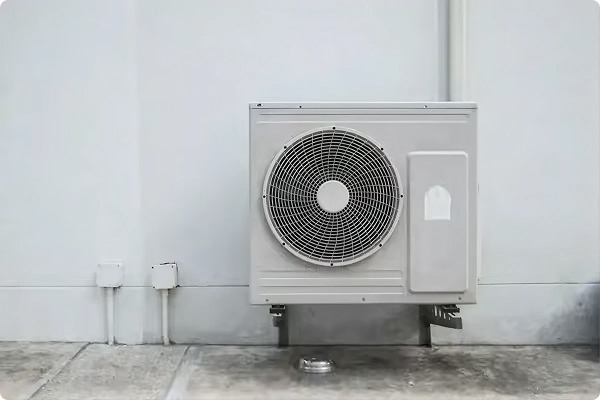
The outdoor condenser sheds heat all summer. During peak season, it quickly collects a buildup of grass clippings, cottonwood fluff, and pollen. A dirty coil forces the system to run hotter and longer.
Before cleaning, cut power to the unit:
- Find the outdoor disconnect box, which is a small metal box mounted on the wall near the condenser, and switch it off.
- Wait 5 minutes before touching anything to allow internal electrical components to safely discharge.
- Confirm the fan has fully stopped spinning before proceeding.
Then clean:
- Vacuum loose debris off the exterior fins with a soft brush attachment
- Spray the exterior fins with a garden hose at moderate pressure, directing the water from the top down to rinse debris out through the bottom
- Avoid direct spray on electrical components
- Let the unit fully dry before restoring power
Never use a pressure washer. It can bend aluminum fins permanently. Clear 2 to 3 feet of open space around the unit and trim back any vegetation that has regrown since the start of the season.
Task 4: Check Your Vents and Airflow
Blocked or restricted vents force the AC to work harder and create hot spots in the home. Peak season is a good time to walk through and verify airflow is unrestricted throughout the house.
Walk through every room and check the following:
- Supply registers are the rectangular or square vents in your floors, walls, or ceilings that blow air into the room. Make sure they’re open and not blocked by furniture, rugs, or curtains.
- Return grilles are the larger vents that pull air back into the system, usually on walls or ceilings. Check that they’re clear of dust, pet hair, and debris.
- Ensure room temperatures feel reasonably consistent throughout the home. One room that’s noticeably warmer than the rest may point to a duct issue.
- Verify ceiling fans should spin counter-clockwise in summer. Stand under the fan and look up. If you feel a cool breeze blowing downward, it’s set correctly. If not, flip the small switch on the motor housing to reverse the direction.
If a room consistently runs warm even with the register fully open, the issue may be inside the ductwork rather than at the vent itself. If you have accessible ductwork in the basement, attic, or crawl space, take a flashlight and look for gaps at seams, sections that have pulled apart, or flex ducts that have been crushed or kinked.
Task 5: Inspect the Condensate Drain Line
Your AC pulls moisture out of the air as it cools your home. That water drains out through a small pipe, usually a white PVC tube, that exits through a wall or into a floor drain. During heavy summer use, that drain line can clog with algae or debris, causing water to back up.
Here’s what to look for:
- Standing water in the shallow pan sitting directly under your indoor AC unit.
- No water dripping from the end of the drain line where it exits the house, even though the AC has been running.
- Visible slime or algae at either end of the drain tube.
If you suspect a clog, here’s a simple fix most homeowners can handle:
- Find where the drain line exits the house and attach a wet/dry shop vac to the end. Run it for 2 to 3 minutes to pull out any buildup.
- Back inside, find the cleanout access (a small capped opening on the drain line near the indoor unit). Remove the cap and pour a cup of distilled white vinegar down the opening to prevent algae from growing back.
Repeat the vinegar treatment every 6 to 8 weeks during peak cooling season. A clogged drain line can shut the AC off via a float switch or overflow into flooring and ceilings below the air handler.
Task 6: Listen for Unusual Sounds or Performance Changes
Peak season is when small issues turn into big ones. A weekly walk-around during heavy operating stretches catches problems early.
Signs to watch and listen for:
- Grinding, screeching, or new humming from the outdoor unit.
- Weak airflow at the vents that has gotten weaker over the past week.
- Warmer-than-expected air from the vents.
- Longer runtimes to reach the same temperature you’ve set.
- Higher-than-expected energy bills.
Any of these warrants a service call. Continuing to run a struggling AC during peak demand is what turns a $200 capacitor replacement into a $2,000 compressor failure.
Task 7: Schedule a Professional Mid-Summer Tune-Up
Homeowner tasks cover the visible work. A professional AC maintenance visit covers the internal work that can’t be safely reached without professional tools: refrigerant charge verification, capacitor testing, electrical connection tightening, and full coil inspection.
Peak-season tune-ups also catch issues that were dormant during light use in spring but surface under heavy demand. Those are the small problems that turn into breakdowns during the hottest weeks of the year.
For year-round scheduled service on HVAC, plumbing, and electrical systems, the Happy Home Club covers scheduled maintenance, no dispatch fees, and 20% off HVAC repairs for $14.95 per month.
Frequently Asked Questions
When should I do peak-season AC maintenance?
Any time the AC has been running heavily for a few weeks. Most homeowners do a check at least once between spring startup and end-of-season shutdown, ideally when temperatures start hitting 85 degrees or higher consistently.
How often should I check my air filter during peak season?
Monthly at minimum, and more often for homes with pets or heavy usage. Filters clog faster when the AC runs longer.
Can I skip peak-season maintenance if I did a spring tune-up?
A spring tune-up is a great start, but it can’t predict how the system will perform once it’s been running hard through weeks of hot weather. A mid-summer check catches issues that only show up under heavy use, like a capacitor starting to weaken or a coil that’s accumulated enough dust to restrict airflow.
What’s the biggest peak-season maintenance mistake?
Ignoring small changes in how the system is performing. If your AC is running longer than usual to reach the same temperature, the airflow at the vents feels weaker than it did a few weeks ago, or you’re hearing a new noise from the outdoor unit, those are early warning signs worth acting on. A small repair caught early is almost always cheaper than a breakdown in the middle of a heat wave.
How much does a professional mid-season tune-up cost?
According to Angi, an advanced AC inspection costs $125 to $200 in Minneapolis. Happy Home Club members receive scheduled maintenance included in the $14.95 per month membership.
Is Your AC Ready for the Hottest Weeks of the Year?
If your system hasn’t been serviced recently or you’re noticing any of the warning signs above, don’t wait for a breakdown. Hero Home Services has been keeping Twin Cities homes comfortable since 1914. Call or text us to schedule a mid-summer AC tune-up before the next heat wave hits.