
Most homeowners know the common signs: the AC won’t turn on, the compressor is dead, or the repair bill is more than the system is worth. But ACs can fail for a lot of reasons. Catching them early lets you plan a replacement instead of reacting to an emergency in the middle of a Minneapolis heatwave. Here are five less obvious signs your AC is ready to retire.
Sign 1: Hot and Cold Spots You Can’t Track Down
Every home has one room that’s warmer than the rest. That’s normal. What’s not normal is a system that used to cool the home evenly and now leaves the upstairs warm, the basement freezing, or one bedroom 5 to 8 degrees off from the thermostat. If you’ve already checked the obvious causes (closed vents, blocked returns, dirty filter, leaky ducts) and the imbalance keeps coming back, it may be time to look into repairing or replacing.
Why it points to replacement: As compressors and blower motors age, they slowly lose capacity. The system can’t move enough conditioned air to keep up with your needs. Simple things like recharging the refrigerant or cleaning ducts won’t fix the issue if the equipment is the issue.
What to do: Have a licensed technician test airflow at each vent cover, check static pressure, and confirm whether the issue is with the duct, blower, or refrigerant. If the AC is over 10 years old and the test suggests that the system’s capacity is the issue, replacement is usually the right call.
Sign 2: Sticky, Humid Air Even When the AC Is Running
Cooling is only half of your AC’s job. The other half is pulling moisture out of the air. When a system is properly sized and working right, your home feels crisp and dry even on a 90-degree afternoon.
When the home feels clammy or sticky even though the thermostat reads 72, the AC is failing at humidity removal. This can show up as foggy windows, slow-drying laundry, that damp basement smell creeping upstairs, or feeling uncomfortable no matter how you adjust the thermostat.
Why it points to replacement: Humidity problems are usually caused by an AC that’s oversized (short cycles before it can dehumidify), undersized (runs nonstop and can’t keep up), or losing refrigerant and compressor capacity. The first two are sizing problems that only a new system can fix. The third is a system nearing the end of its life.
What to do: Get a detailed load calculation from a licensed installer. A load calculation, known in the industry as a Manual J, measures your home’s square footage, insulation levels, window placement, sun exposure, and air leakage to determine the exact cooling capacity your home needs. If the sizing is off or the equipment is failing, a properly sized replacement will handle the humidity far better than continuing to put money into the current system.
Sign 3: Your AC Runs Nonstop
When it’s 95 outside, your AC is going to run a lot. What’s not expected is the system running nonstop on a 78-degree day or struggling to recover after a thunderstorm. If the outdoor unit barely shuts off in spring and fall, the system is losing efficiency, capacity, or both.
Why it points to replacement: A healthy AC cycles on and off based on demand. Continuous runtime usually means the compressor is weak, the refrigerant charge is low, the coils are restricted, or the system is simply too old to keep up. The constant runtime also drives your electric bill straight up. A modern variable-speed system runs longer at lower output, but it does it efficiently. An old system running nonstop is just expensive.
What to do: Compare your current energy usage to the same time last year. A jump of 20% or more with no real comfort improvement almost always means the system is nearing the end of its working life.
Sign 4: The Repair Math Is Headed the Wrong Way
Two repairs over ten years is normal maintenance. What’s not normal is three repairs during one season. The real warning sign is when repair frequency and cost start adding up to a number that doesn’t make sense anymore. There are three reliable ways to find out if it’s time to replace:
- You need multiple repairs in a single season. If you’ve had two or more service calls in the last 12 months on the same system, the equipment is breaking down faster than it’s getting fixed.
- A single repair is over 50% of the replacement cost. If the technician quotes you $4,500 to replace a compressor on a system that would cost $8,000 to replace, you’re probably better off going through with the replacement. Paying for that repair means spending most of the replacement cost just to extend an aging system by a few years at best.
- The $5,000 rule. Multiply the repair cost by the age of the system in years. If the result is over $5,000, replacement is usually the way to go. For example, a $500 repair on a 12-year-old AC equals $6,000, which points to replacement.
Sign 5: The Outdoor Unit Sounds Different Than It Used To
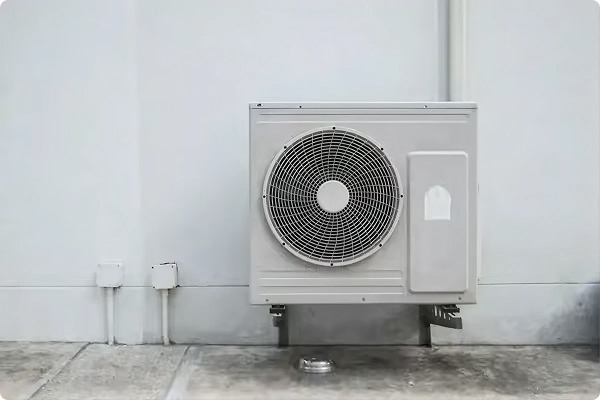
Air conditioners make noise. A steady hum from the outdoor condenser is normal. New sounds are not. A grinding, screeching, or rattling noise often points to a failing motor, worn bearings, or loose internal parts. A clicking sound that wasn’t there before can mean a relay or capacitor is failing. A loud bang at startup can mean the compressor is on its way out.
Why it points to replacement: Most outdoor unit noise comes from a part that’s wearing out. Some parts (capacitors, contactors, fan motors) are inexpensive to replace. Others (compressors, condenser coils) often cost more than the system is worth. The earlier you catch a new noise, the more time you have to plan a replacement.
What to do: Don’t ignore new sounds. Have a Hero technician diagnose the noise, identify the part, and walk through whether the repair makes sense given the system’s age. A 5-year-old AC with a bad fan motor is a repair. A 13-year-old AC with the same problem is usually a replacement.
What Does AC Replacement Actually Cost?
If you’re seeing these signs, the next question is usually the price tag. As of 2026, the average AC replacement cost in Minneapolis is between $1,500 and $8,200. Final pricing depends on system size, efficiency, and ductwork conditions. Most homeowners use financing, including 0% APR options for qualified buyers.
Every reputable contractor gives you a written estimate before any work begins. If a quote skips the breakdown or doesn’t list the equipment model, ask for one.
Frequently Asked Questions
How old is too old for an AC?
Most central AC systems are designed to last about 15 to 20 years. According to ENERGY STAR, high-efficiency replacement units can save up to 20 percent on heating and cooling costs, especially if your current system is more than 10 years old. If your AC is 15 or more years old and showing the signs above, replacement almost always makes more financial sense than another repair.
What is the $5,000 rule for AC replacement?
Multiply the cost of the repair by the age of the system in years. If the answer is over $5,000, replacement is usually the best course of action.
Should I replace an AC that still works?
If the system is over 15 years old and bills are climbing, replacement is often worth it even without a major breakdown. According to ENERGY STAR, a properly installed high-efficiency AC can save up to 20 percent on heating and cooling costs, and pay back the install over time.
How long does AC installation take?
A standard central AC replacement takes about a day. New ductwork or a multi-zone mini-split can take 2 to 5 days. Larger projects can take longer.
Can I diagnose AC problems myself?
You can check the basics: thermostat settings, filter condition, breaker, condensate drain, and outdoor unit clearance. Anything past that (refrigerant, electrical, compressor, or motor work) needs a licensed technician. Give us a call if the basics check out and the problem persists.
When should I call a professional?
Call as soon as the AC is doing something it didn’t do before: new sounds, uneven rooms, struggling to keep up, or cycling differently. Catching it early is the difference between a planned replacement and an emergency.
Ready to Find Out if It’s Time for a New AC?
If your AC is showing any of these signs, the smartest next step is an in-home evaluation before the next heatwave. A Hero technician will run the diagnostics, walk you through the numbers, and provide your options in writing. Call or text us today to book an appointment.