24/7 Answering

Cooling an older home presents a different challenge than cooling a new one. Plaster walls, finished ceilings, narrow joist bays, and no central ductwork all rule out the standard approach. If you’re shopping for air conditioning for an older home in Minneapolis, this guide covers the four realistic options, what each one costs, and how to match the right system to the home you have.
Why Older Homes Need a Different AC Approach
Most homes built before 1950 were designed for radiators or steam heat, not forced air. That means no ductwork, plaster walls that don’t take kindly to being torn open, and finished ceilings or closet spaces that homeowners aren’t eager to lose. A traditional central AC requires 6- to 8-inch metal ductwork running through the home, and in a Twin Cities bungalow or Foursquare, there’s often simply no practical way to fit it.
The good news is that several systems were designed for exactly this situation. Each one approaches the problem differently, with its own cost range, aesthetic trade-offs, and installation footprint.
Fan Coil Systems for Older Homes
A ducted fan coil system pairs with a heat pump, chiller, or existing boiler and delivers conditioned air through standard or slightly downsized ductwork. It’s a good fit for homes that have at least some existing duct infrastructure, or a clear path to run new ducts through a basement or a few wall cavities without major demolition.
Pros: Provides quiet, even cooling through a familiar register-and-grille setup. Works with an existing boiler, so you don’t have to abandon a working heat source. Variable-speed models can run nearly silently.
Cons: System needs space for the indoor unit (basement, attic, or large closet) and at least some duct routing. Won’t fit homes with zero room for ductwork.
Typical cost: Hero Home Services offers large-duct fan coil system installation starting as low as $330 per month with approved credit. Contact Hero for current pricing and financing details.
High Velocity Small Duct Systems for Older Homes
A high-velocity small duct system uses 2-inch flexible tubing in place of 6- to 8-inch traditional ductwork. The smaller tubes snake through existing wall cavities, so you can add central cooling without tearing out plaster or dropping ceilings. The outlets in each room are small, round, unobtrusive (about the size of a smoke detector), and the system delivers even, draft-free cooling in every room.
Pros: System fits where traditional ductwork can’t be used. Looks closer to central AC than mini-splits do. Pairs well with a heat pump for year-round comfort.
Cons: Installation requires higher upfront cost than most alternatives. The indoor unit still needs a home (typically attic or basement). Some systems run slightly louder than a conventional central AC.
Typical cost: Hero Home Services offers small-duct AC system installation starting as low as $260 per month with approved credit. See offer details for current terms.
Ductless Mini-Split Systems for Older Homes
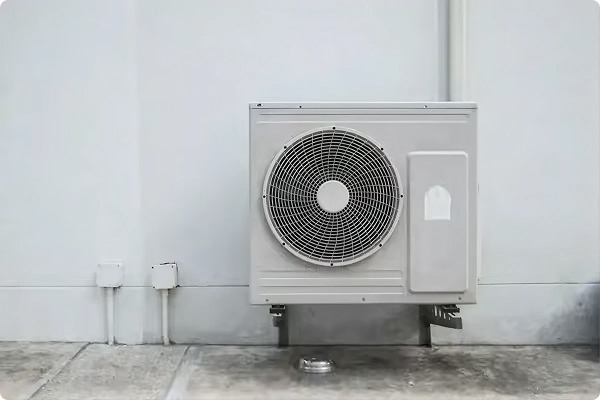
A ductless mini-split needs no ductwork at all. The indoor head mounts on the wall in the room you want to cool, the outdoor condenser sits outside, and a small refrigerant line connects them through a 3-inch hole in an exterior wall. Each head runs independently, so you can cool the rooms you actually use rather than the whole house at once.
Mini-splits are the most affordable path to cooling an older home without ductwork, and they are among the most efficient systems available. The efficiency ratings are genuinely high, typically 18 to 33 SEER2. The main trade-off is aesthetics since the indoor head is visible on the wall in every room it serves. For homeowners who care about the look of their historic interior, that’s a real consideration.
Typical cost: According to Angi, a single-zone mini-split in Minneapolis costs $2,500 to $5,550 installed. Multi-zone whole-home systems run $9,000 to $18,000.
What If Your Older Home Has No Ductwork?
Adding air conditioning with no ductwork comes down to three paths.
The first is adding traditional ductwork, which is the most disruptive and usually the most expensive approach. It requires cutting into ceilings and walls, running sheet metal through joist bays, and patching and repainting afterward. The ductwork alone can run $5,000 to $15,000 before the AC equipment is even factored in, and the project can take one to three weeks. It only makes sense when there’s a genuinely clear path for the ducts, and you are prepared for that level of construction.
The second path is a high velocity small duct system, which uses flexible tubing that routes through existing cavities with far less demolition. The third is a ductless mini-split, which skips ducts entirely. The choice between those two usually comes down to aesthetics. High-velocity systems look like central air with hidden outlets, while mini-splits leave visible heads on the wall in exchange for a lower price.
Central Air Conditioning for Older Homes With Radiators
Plenty of Minneapolis bungalows and Foursquares run on hot water radiator heat with no ductwork in the home. The good news is that adding cooling doesn’t mean giving up the boiler.
Fan coil systems and high velocity systems can both be paired with a heat pump or chiller to add central cooling while the radiators stay exactly where they are as the primary winter heat source. A ductless mini-split is a third option that has no relationship to the existing heating system at all.
The radiator-and-cooling combination is one of the most common AC upgrades Hero installs in older Minneapolis neighborhoods. The boiler stays in service through winter, and the new cooling system handles summer without touching what already works.
Quick Comparison: Air Conditioning for Older Homes
- Fan Coil System — Ductwork required: Yes, standard or downsized. Install disruption: Moderate. Some duct routing and indoor unit placement. Typical cost: $3,500 to $18,000. Best use case: Boiler homes adding central cooling with room for ducts.
- High Velocity Small Duct — Ductwork required: Yes, 2-inch flexible tubing. Install disruption: Low. Tubing fits through existing wall cavities. Typical cost: $18,000 to $30,000. Best use case: Older homes with plaster, finished ceilings, no room for big ducts.
- Ductless Mini-Split — Ductwork required: None. Install disruption: Lowest. Small refrigerant line through an exterior wall. Typical cost: $4,500 to $18,000. Best use case: Homes with no ductwork that don’t mind visible indoor heads.
Financing for Older Home AC Projects
Adding air conditioning to an older home is usually a larger project than a standard equipment swap. Hero finances AC installations through Service Finance Company, LLC, including 0% APR options for qualified buyers. See financing options for terms and approval details.
Frequently Asked Questions
Can I Add Air Conditioning with No Ductwork?
Yes. Older homes without ductwork have three realistic options. These include a high velocity small duct system that routes through existing wall cavities, a ductless mini-split that mounts indoor heads on the wall, or adding traditional ductwork and a central AC. The right choice depends on the home’s layout, the budget, and how important it is to keep the equipment out of sight.
What Are the Best Heating and Cooling Systems for Older Homes?
For most older Minneapolis homes, the strongest combinations are a fan coil system with a heat pump, a high velocity AC alongside an existing boiler, or a ductless mini-split paired with the original heating system. All three approaches leave the home’s character intact while adding modern cooling.
Can I Get Central AC if My Home Has Radiators?
Yes. A fan coil or high velocity system can be paired with a heat pump to add central cooling without touching the boiler. The radiators stay as the primary heat source through winter, and the new system handles summer only. This is one of the most common AC setups in older Twin Cities neighborhoods.
What HVAC Options Work in Old Houses with Plaster Walls?
Plaster walls make traditional ductwork projects significantly more disruptive. High velocity small duct systems and ductless mini-splits are both designed to avoid major plaster work. A high velocity installation routes 2-inch tubing through existing cavities. A mini-split needs only a small refrigerant line through an exterior wall.
How Long Does It Take to Install AC in an Older Home?
A ductless mini-split typically takes one to two days. A fan coil installation runs about the same. A high velocity small duct installation takes three to five days. Adding traditional ductwork plus central AC is the most involved option, often taking one to three weeks depending on the home. Your in-home estimate will confirm the actual timeline for your specific project.
Will I Need Permits for an AC Install in Minneapolis?
Yes. Minneapolis and most Minnesota cities require a mechanical permit for new AC installations and full replacements. Permits are pulled by the licensed contractor, not the homeowner.
Schedule an In-Home AC Consultation
Choosing the right AC for an older Minneapolis home is easier with someone who has seen a lot of them. A Hero technician will walk through the home, look at the heating system and wall cavities, and put together a plan that fits the house. Hero Home Services will talk you through your options for AC installation and answer any questions you might have. Book your visit online or give us a call.