
Cooling your home can turn into a major expense. Air conditioning accounts for approximately 12 percent of the average US home’s annual energy bill. Fortunately, cutting down what you spend doesn’t necessarily mean replacing the AC or paying for major upgrades. A handful of habits and one or two smart upgrades can significantly drop your cooling costs over a season. Here are eight tips you can put into action today.
1. Use a Programmable or Smart Thermostat
A certified smart thermostat can save you approximately $100 a year, especially in houses with high heating and cooling bills or long stretches when the home sits empty. Smart thermostats learn your routines, adjust to your habits, and raise the temperature automatically when you’re away.
Even without a smart thermostat, small temperature adjustments matter. Raising the thermostat a few degrees when the house is empty, and again overnight, reduces cooling runtime without sacrificing comfort.
2. Seal Air Leaks Around Doors and Windows
Cool, comfortable air that escapes through gaps around your doors and windows is wasted energy. The EPA estimates that homeowners can save an average of 15 percent on electrical costs by sealing air leaks and adding insulation.
Where to check:
- Weatherstripping around doors, which should compress fully when closed
- Caulking around window frames
- Attic hatches and pull-down stairs
- Recessed can lights in insulated ceilings
- Basement rim joists and utility penetrations
Most common fixes cost under $100 in total. Weatherstripping runs about $10 to $40 per door, caulk is a few dollars a tube, and foam outlet gaskets are inexpensive as well. A Saturday’s worth of work usually seals the biggest leaks in a typical home.
3. Use Ceiling Fans the Right Way
Ceiling fans don’t actually cool the air. A fan simply moves air, making the room feel cooler without changing the actual temperature.
When the fan is on, you can nudge the thermostat a few degrees higher without feeling any less comfortable. Turn fans off when the room’s empty and set them to spin counter-clockwise during the summer for the best effect.
4. Keep Your AC Maintained and the Filter Clean
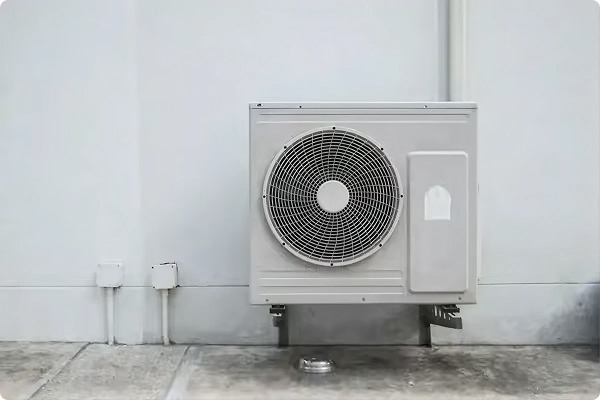
A neglected AC quietly loses efficiency month by month, and the biggest culprit is usually restricted airflow. A dirty filter or dusty coil can drop efficiency by up to 15 percent, and that’s just one of the issues a tune-up catches. Two maintenance habits handle most of the rest:
- Change the air filter every 1 to 3 months during the cooling season
- Schedule annual professional AC maintenance in spring
For year-round scheduled care, the Happy Home Club maintenance plan covers HVAC, plumbing, and electrical for $14.95 per month.
5. Close Blinds and Curtains During Peak Heat Hours
Direct sunlight coming through your windows can dramatically increase indoor temperatures. A standard double-pane window allows approximately 75 percent of the sun’s heat into the home.
Best practices:
- Close south- and west-facing blinds between 10 AM and 6 PM
- Use blackout or thermal-lined curtains on the hottest-facing windows
- Consider window films or exterior shading for windows with heavy afternoon sun
- Leave north-facing windows open for natural light without significant heat gain
South-facing windows get direct sun most of the day, and west-facing windows catch it during the hottest part of the afternoon when the AC is already working hardest.
6. Open Windows Strategically at Night
During cool Twin Cities nights in spring and fall, opening windows overnight can drop indoor temperatures without any AC runtime.
The flush-cool method:
- Open windows on opposite sides of the home for cross-ventilation
- Position box fans in windows to accelerate the exchange
- Close windows in the morning before outdoor temperatures rise
- Draw curtains to trap the cool air inside
This technique works best when the overnight temperature drops. However, on humid nights when the dew point is high, keeping the windows open can actually increase indoor humidity, so watch the forecast before leaving them open all night.
7. Check Your Home’s Insulation
Attic insulation directly affects how hard your AC works. Warm attic air can radiate through the ceiling in your home all summer, and the system runs longer to keep up.
Minnesota code recommends R-49 to R-60 attic insulation for new construction homes. Homes built before 2000 often have R-19 to R-30, which is significantly below current standards.
Signs the insulation may need attention:
- Second-floor bedrooms consistently warmer than the first floor
- Ceilings feel warm on hot days
- Cooling bills climb each year despite regular maintenance
- Visible daylight around attic hatches
Adding blown-in cellulose or fiberglass is one of the most cost-effective upgrades available. It reduces AC runtime and extends the life of your equipment.
8. Consider Upgrading to a Higher SEER2 System
For homes running older AC equipment, upgrading to a modern, high-efficiency unit is one of the most impactful changes you can make. Swapping old heating and cooling equipment for certified models can cut an annual energy bill by nearly $140.
Frequently Asked Questions
What’s the biggest energy-saving change I can make?
For most homes, a programmable or smart thermostat with proper temperature setback is the highest-impact single change.
Is it better to leave the AC on “low” or turn it off when I leave the house?
Setting it to a slightly higher temperature is typically the best option. Turning the AC off completely means the system draws heavy startup energy when it kicks back on. Raising the thermostat while the house is empty saves more than shutting it off entirely.
Do ceiling fans save energy?
Yes, but only when someone’s in the room. Ceiling fans cool people, not spaces, so running one in an occupied room lets you set the thermostat a few degrees higher without noticing the difference. Running one in an empty room just wastes electricity.
How often should I have my AC serviced to keep it efficient?
Annually, ideally in the spring. A well-maintained AC uses far less energy than a neglected one and can last several years longer.
Ready to Lower Your Cooling Costs This Summer?
Whether you need a quick tune-up, a filter check, or a full system upgrade, Hero Home Services is ready to help. We’ve been keeping Twin Cities homes comfortable since 1914. Call or text us to schedule AC maintenance or an in-home consultation.